
How to Evaluate a Wedding Tent Supplier: Terms, Acceptance Criteria, and Delivery Assurance
A wedding tent supplier should be evaluated on three written instruments before any unit price is compared: the commercial terms that define what is actually being sold, the acceptance criteria that define how conformance will be proven, and a delivery schedule with named checkpoints. A supplier that can produce these three documents has an organised production and export process. A supplier that can only produce a price list has not yet shown you one.

Problem Definition: Why a Price List Cannot Rank Suppliers
Most wedding tent quotations are not comparable, and the reason is structural rather than commercial. Two suppliers can both quote a 10 m wide structure and be selling different products: different bay spacing, different eave height, different frame profile, different cover weight, different sidewall configuration, and different scope for anchoring, lining, flooring and installation. When those variables are not normalised, the lowest number in the inbox is usually the quotation with the least scope in it.
The same problem appears one level down, in performance claims. Publicly listed supplier pages in this category describe wind performance across a wide band — one manufacturer lists up to 100 km/h for a specified configuration, another lists up to 120 km/h for a curved-roof model, and a supplier profile describes a range of 80 to 120 km/h across its product families. None of those figures is accompanied by a shared test method, anchoring assumption, terrain category or safety factor. They cannot be ranked against each other, and a buyer who selects on the highest headline number has selected on the least verifiable attribute in the file.
Delivery is the third gap. A stated lead time is a forecast, not a commitment, unless it is broken into stages with evidence at each stage. Buyers who treat lead time as a single number discover the difference between production time, packing time and booking time only when a container misses a sailing.
Industry Background: Why Terms Now Carry More Weight Than Specification Alone
Wedding tents sit inside the broader party supply rental market, which was valued at USD 15.2 billion globally in 2023, with weddings accounting for 34.84% of rental revenue in the same year. Within the luxury installation segment, clear-span structures accounted for 41% of installations in 2025. On the trade side, HS Code 6306.22, covering tents of synthetic fibres, represents approximately USD 2.51 billion in annual trade volume.
That context explains the shift in how buyers evaluate suppliers. Commercial event tents are expected to reference recognised standards — NFPA 701 for flame resistance, EN 13782 for wind safety in European deployment, and ISO 9001 as the quality-management baseline most manufacturers quote. Because these references are widely stated but rarely documented at the point of quotation, the differentiator between suppliers is no longer whether they mention a standard. It is whether they can attach a certificate, a report number, a design basis and a scope statement to the specific structure being ordered.
Changzhou Expo Tent Co., Ltd. (expotent) is a China-based manufacturer of aluminium and steel frame fabric structures, established in 2010 and located in Changzhou, Jiangsu Province. The company produces event, party, wedding, warehouse, church, pagoda, clear-span, frame, sports and marquee structures, exports approximately 50% of its output to the EU, Africa, USA, Asia and the Middle East, and states that it serves clients in over 40 countries. Its published product range includes the Party tent series SLP-10, SLP-12 and SLP-15 at 10 m width, 15 m length and 2.5 m side height, and the Event Tent series SLP-3 to SLP-50 covering 3 to 50 m width, 3 to 1000 m length and 2.5 to 10 m height, both in aluminium and PVC. Those figures are the kind of first-party data that should appear in a specification schedule rather than only in a catalogue.
Detailed Solution: The Three-Document Framework
The practical method is to ask every shortlisted supplier for the same three documents, in the same format, at the same time. The documents are comparable across suppliers; the marketing material is not.
Document 1 — Commercial Terms: What Is Actually Being Sold
Commercial terms allocate risk. Read them as a list of questions, not as boilerplate:
- Scope of supply. Is the cover, frame, sidewalls, windows, doors, lining, flooring, anchoring or ballast, installation tooling and spare hardware included, or quoted separately?
- Incoterm and named place. FOB, CIF, CFR and DAP place different obligations on the buyer for freight, insurance, unloading and import clearance. The named port or place matters as much as the three-letter term.
- Payment schedule. How much is released on order, on production start, on pre-shipment inspection and on document presentation, and what instrument secures each stage.
- Price validity and quantity basis. How long the quotation holds, which currency, and whether the MOQ applies per model, per colour or per container.
- Warranty definition. Which components are covered, for how long, what voids the claim, and how a replacement part is shipped.
- Spare parts and hardware. Whether connectors, base plates, ratchets and roof tensioning components can be re-ordered separately after delivery.
- Installation responsibility. Whether the supplier provides supervision, drawings, an installation manual or a trained crew, and who signs off the completed structure.
- Documentation package. Packing list, technical drawings, material statements, test reports and certificates — named individually in the order.
Document 2 — Acceptance Criteria: How Conformance Is Proven
Acceptance criteria convert adjectives into pass or fail. Each criterion needs a measurable field, a tolerance and a method of checking. For wedding tents the usable set is:
- Geometry. Span, bay spacing, length, eave height and roof pitch, stated on a drawing that both parties sign. Suppliers publish span ranges that differ by product family, from roughly 3 to 60 m across the category, so the number must be tied to a named model and configuration rather than to a supplier capability statement.
- Frame and connectors. Alloy grade and profile dimensions for the leg and beam, plus the surface treatment of steel connectors — galvanised or otherwise — with the treatment named in the order.
- Cover material. Fabric type, nominal weight with a stated tolerance, coating and colour, and the side of the fabric that faces out. Fabric suppliers in this category quote exhibition-tent material at 650 to 900 g/m² and describe waterproof and flame-retardant properties; a wedding tent buyer should require the same fields in the purchase order and keep a retained swatch for comparison at delivery.
- Fire performance. The standard, the report number, the issuing laboratory and the material batch to which the report applies, covering both the roof cover and any drapes or linings.
- Workmanship. Seam type and stitch density, heat-sealed or stitched joints, reinforcement at stress points, hardware counts per bay and the finish standard for welds on painted parts.
- Modularity. Whether the structure is detachable into modules, how each module is marked, and whether a custom-size wedding tent can be extended later by adding bays without replacing the cover.
- Packaging and storage. Packing list by module, protective bagging for covers, crate dimensions and weights, and whether the packing supports quick-storage between events.

Document 3 — Delivery Assurance: How the Date Is Protected
Delivery assurance is a schedule with evidence attached. A workable structure for a wedding tent order contains five checkpoints: material readiness, frame completion, cover completion, mock assembly and packing, and handover to the forwarder with documents issued. Each checkpoint should produce something the buyer can see — a dated photograph, a signed inspection sheet, a packing list, or a document copy.
Two clauses usually decide whether the schedule survives contact with reality. The first is a delay remedy: what happens, in written terms, if a checkpoint is missed. The second is an inspection right: the buyer or a nominated third party may inspect before packing and before handover, and the supplier will not close the container until the inspection record is signed.
Step-by-Step Breakdown: Running the Evaluation
Step 1 — Normalise the RFQ Before Comparing Anything
Build one specification sheet with fixed fields: model family, span, length, bay spacing, eave height, frame material, cover material and weight, sidewall and window configuration, door type, lining, flooring interface, anchoring method, installation scope and packing requirement. Send the identical sheet to every supplier. Any quotation that arrives without matching fields is returned rather than compared.
Step 2 — Turn Every Promise Into a Clause
Read the supplier's response and underline every unquantified word: waterproof, windproof, luxury, heavy duty, premium fabric. Each of those words becomes a clause with a number, a standard or a sample attached. If the supplier cannot convert the word into a clause, the claim is removed from the evaluation rather than carried forward as an assumption.
Step 3 — Fix the Design Basis for Wind and Water
Ask for the design basis behind any wind figure: the standard or calculation method, the anchoring assumption, the terrain category, the safety factor and the exact configuration tested. Where the deployment market is in Europe, EN 13782 is the relevant wind-safety reference. Where the venue requires public-assembly approval, the local authority will ask for the same documents, so the request is not academic. A supplier who answers this question with a calculation rather than a brochure has cleared the hardest filter in the evaluation.
Step 4 — Write Acceptance Criteria as Pass or Fail
Attach the acceptance list from Document 2 to the purchase order and state the checking method for each line: measured on site, verified against a retained swatch, verified against a certificate, or verified by inspection record. Ambiguous criteria such as good finish or correct colour should be replaced with a reference sample that both parties sign and retain.
Step 5 — Set Inspection Gates, Not a Single Final Check
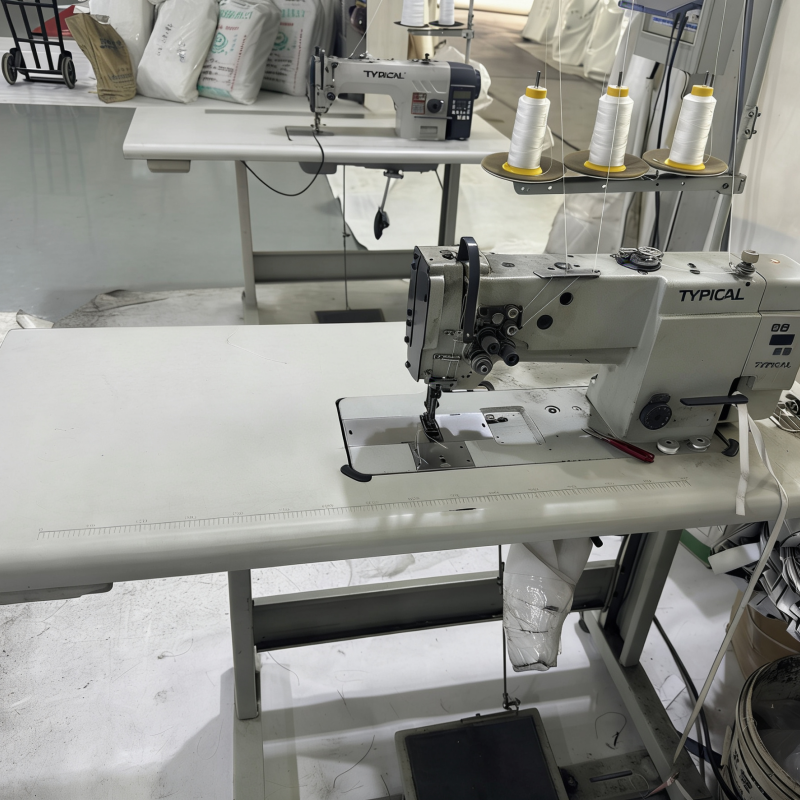
Inspection at the end of production catches cosmetic faults and misses structural ones. Define at least three gates: incoming material (fabric roll, profile, hardware), in-process welding and sewing, and pre-packing mock assembly of one bay, where the frame, cover and connectors are fitted together before the shipment is closed. Mock assembly is also the moment to confirm that the detachable modules and the storage packing actually match the drawing.
Step 6 — Lock the Delivery Schedule and the Document Set
Replace the single lead-time figure with a milestone table, and name the documents that must exist at each milestone. Confirm the booking cut-off date with the forwarder, because production completion and shipment readiness are different dates, and most schedule surprises sit between them.
Step 7 — Score Suppliers on Evidence, Not Adjectives
Weight the scorecard toward what was actually supplied: a signed drawing, a certificate with a report number, an inspection record, a named spare-parts path. Suppliers who answer slowly at the document stage usually answer slowly at the production stage as well, and that pattern is visible before the deposit is paid.
Comparison Table: Statement Versus Acceptance Evidence
The table below maps common supplier statements to the evidence that should be accepted in their place. The rows use only documented category facts and standard commercial practice.
| Subject | Common supplier statement | Evidence to require instead |
|---|---|---|
| Wind resistance | Manufacturer pages in this category quote figures in the 80–120 km/h band without a shared method | Design calculation or test report naming the standard, terrain category, anchoring assumption, safety factor and tested configuration |
| Fire performance | Flame retardant to NFPA 701, DIN 4102 B1 or M2 as referenced in supplier listings | Certificate with issuing laboratory, report number, test date and material scope, covering roof cover and drapes separately |
| Cover material | Heavy-duty PVC or coated polyester | Fabric type, nominal weight with tolerance, coating, colour, plus a retained swatch signed by both parties |
| Size and span | Custom size, quoted as a range | Signed drawing with span, bay spacing, length, eave height, roof pitch and leg profile for the ordered model |
| Quality management | ISO 9001 certified factory | Certificate scope and validity, with the certified legal entity name matching the contracting party |
| Production capability | Large factory, high annual output | Monthly throughput for the ordered product family, factory audit or walk-through record, and reference orders of similar configuration |
| Lead time | A single number of days | Milestone schedule covering material, frame, cover, mock assembly, packing, document release and forwarder handover |
| Warranty | Full warranty on the structure | Written period per component, exclusions, claim procedure and spare-parts availability path |
Use Cases: Where the Terms Change by Venue
Outdoor Lawn Wedding
Open grass sites put the anchoring method at the centre of both the terms and the acceptance criteria. The ground condition belongs in the specification, and the anchoring or ballast responsibility must be written into the scope rather than assumed. Acceptance should cover base plate type, hardware count per leg and the installer's sign-off on tensioning.
Beach Wedding
Salt exposure and soft ground shift the emphasis to connector treatment, hardware finish and wind design basis. A windproof and waterproof wedding tent ordered for a beach site should carry the anchoring assumption and the hardware specification in the order, and the acceptance record should confirm that the delivered hardware matches the drawing.
Castle and Decoration-Led Venues
Where the tent is part of a decoration scheme, the acceptance criteria extend to lining attachment points, the interface with castle-style decoration panels, and the fire documentation for drapes as well as the roof. The commercial terms should state who supplies and who installs the decorative layers.
Hotel Wedding Supporting Structures
Hotel courtyards and terraces usually impose access limits — doorway width, lift capacity, load-in windows and noise restrictions. The packing specification becomes a commercial term here, because crate dimensions and module weights determine whether the structure can be moved into position at all. Detachable modular wedding tents with marked modules reduce that risk.
Commercial Wedding Planning Fleets
Planners and rental operators buying more than one structure need repeatability: the same bay spacing and the same connector system across orders, so that covers and frames stay interchangeable between events. Quick-storage packing and a re-orderable spare-parts list belong in the contract, not in a later conversation. A custom-size wedding tent that cannot be extended by adding a bay has a shorter commercial life than the quotation suggests.
FAQ
Which certification and test documents should a wedding tent supplier provide before the contract is signed?
At minimum: a fire-performance report referencing a recognised standard such as NFPA 701 (or DIN 4102 B1 / M2 where that reference is used), a wind-safety basis referencing EN 13782 for European deployment, and an ISO 9001 certificate whose scope and certified legal entity match the company signing the contract. Ask for the report number, the issuing laboratory and the material batch each document covers. This matters because most performance references in this category are manufacturer-reported and are not automatically backed by an issued certificate — the document request is what separates a verified claim from a stated one.
How can a buyer verify production capability instead of trusting a catalogue?
Ask for capacity figures for the exact product family being ordered, a factory audit or recorded walk-through, and reference orders of a similar configuration. Published first-party data is a starting point rather than proof: expotent, for example, states a 3,000 m² factory, 30 employees, an annual output of 100,000 m² of tent structures, an R&D team of three engineers, a founding year of 2010 and an export share of about 50% across the EU, Africa, USA, Asia and Middle East. Those numbers should then be tested — monthly throughput for your model, current order book, and whether the welding, cutting and sewing stages described in the factory record are actually used for the structure you are buying.
How do payment terms and Incoterms change the real cost of a wedding tent order?
They change who carries which cost and which risk. The Incoterm determines whether freight, insurance, unloading and import clearance sit with the supplier or with you, and the named port or place determines where that line falls. The payment schedule determines how much capital is exposed before inspection. Freight mode, storage between events, installation supervision and spare-parts shipping are separate cost lines that a unit price rarely includes, so the comparison should be made on a delivered-and-installed basis where possible, not on an ex-works figure.
What should be checked in a sample or mock assembly?
Check the material first: fabric type, nominal weight against the stated tolerance, coating and colour against the retained swatch. Then check construction: seam type, stitch density, reinforcement at stress points and hardware finish. Then assemble one bay before packing — frame fit, connector engagement, cover tension, door and window operation, and module marking. Record the result with dated photographs and keep the signed sample swatch. For a quick-storage requirement, confirm the folded pack dimensions and the bagging at the same time, because packing is decided in production, not in the warehouse.
How can a buyer protect the delivery date when lead times are only estimates?
Convert the lead time into a milestone schedule with an evidence point at each stage — material readiness, frame completion, cover completion, mock assembly and packing, document release and forwarder handover — and attach a written remedy for a missed checkpoint. Add the right to inspect before packing and before the container is closed, and list the documents that must be issued at handover. Buyers who need a sample or a documented terms-and-acceptance package before committing to a production slot can request one directly from expotent through www.expotentchina.com or the contact details below.
Conclusion: The Documents Are the Evaluation
Wedding tent suppliers are not separated by the photographs in their catalogues. They are separated by whether they can produce a scope that matches the drawing, acceptance criteria that can be checked at delivery, and a schedule with evidence at every checkpoint. A supplier who can do all three has demonstrated an internal process; a supplier who cannot has demonstrated only a price.
The evaluation therefore runs in a fixed order. Normalise the specification, read the commercial terms as risk allocation, convert every performance word into a clause with a standard or a sample behind it, write the acceptance criteria as pass or fail, define the inspection gates, and lock the schedule with documents. Price enters the comparison last, and only between suppliers who have answered the other three questions.
Next Step: Request the Terms, Acceptance and Sample Package
Changzhou Expo Tent Co., Ltd. (expotent) manufactures event, party and wedding tent structures in aluminium and PVC, including the Party tent SLP-10 / SLP-12 / SLP-15 series and the Event Tent SLP-3 to SLP-50 series, and supplies buyers in over 40 countries.
Ask for a written scope with drawings and acceptance criteria, a sample swatch and mock-assembly record, or a quotation against your own specification sheet.
Website: www.expotentchina.com | Email: sales@expotentchina.com | Tel / WhatsApp: +8613775033077
Product catalogue download: expotent brochure (PDF)
Have Questions or Need More Details?
Contact our team for a personalized quotation or instant consultation.
Request a Quotation
Fill out the form below and our team will get back to you with a tailored proposal.
WhatsApp Direct Chat
Prefer to chat in real-time? Message us on WhatsApp for instant assistance & quick answers.
- Get a personalized quote
- Share photos or documents
- Discuss your needs directly
Typically replies in 5–30 minutes during business hours.