
Top Party Tent and Event Tent Picks: A Recommendation Guide for Every Buyer
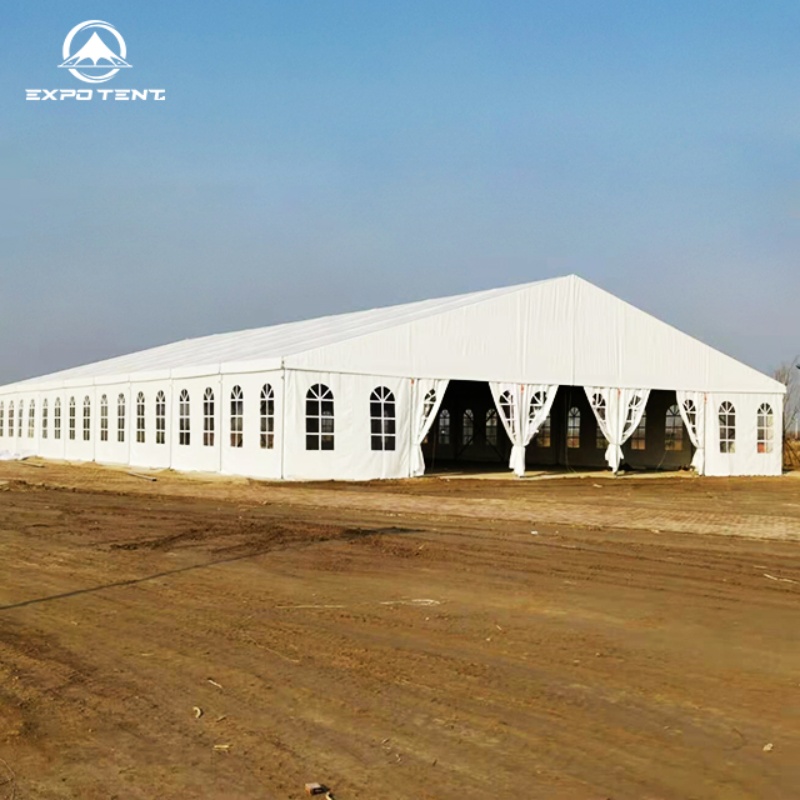
Cover: a high-peak clear span event tent — the structure class behind the Event Tent recommendation in this guide.
This guide recommends two tent picks and explains which buyer each one fits. The Party Tent is the pick for celebration-led projects where the structure is hired out or resold repeatedly. The Event Tent is the pick for specification-led projects where span, height and certification have to be documented for a client, a venue or an insurer. Both are documented products of Changzhou Expo Tent Co.,Ltd. (brand: ExpoTent), a tent manufacturer established in 2010 in Changzhou, Jiangsu Province, China, which designs, manufactures, develops, sells and rents aluminum and steel frame fabric structures, tents and marquees.
Choosing a tent type is a different job from choosing a supplier, and buyers who skip the first job end up comparing quotations for products that never competed with each other. This page handles the first job only: it fixes the scenario, names the pick, states what is actually documented about the product, and is explicit wherever the available product data does not cover a parameter.
The guide is organised as a shortlist decision. Section by section it covers the shortlisting problem, the market background behind both picks, each recommendation in detail, a five-step process for turning a shortlist into a first order, the use cases each pick serves, a side-by-side comparison table, and answers to the questions buyers ask most often before requesting a sample or a quotation.
The shortlisting problem: why 'tent' is not yet a specification
Tent procurement rarely stalls because buyers cannot find suppliers. It stalls because a scenario has not yet been converted into something a supplier can quote. Three failure patterns account for most of the delay.
Category collapse. Buyers treat 'tent' as one product. It is not. A hired celebration structure and a large event structure are bought by different people, for different reasons, with different risk exposure. Collapsing them into one line item produces a specification no supplier can answer precisely, and the resulting quotations are not comparable.
Scenario fixed too late. When the venue, the season, the duration of use and whether the structure is temporary, semi-permanent or permanent are decided after the technical specification, parameters get rewritten and the procurement restarts. The scenario sentence should exist before the first supplier email.
Documentation checked last. Compliance, acceptance criteria and lead time are frequently confirmed only after a supplier has already been selected. In event tents, structural and flame documentation is often the item the venue or the client asks for first, so it belongs in the shortlist stage, not the contract stage.
The practical consequence of all three patterns is the same: a second procurement round. The shortlist below is designed to prevent it.
The four questions a usable shortlist answers
- What is the structure for? A private celebration, a public event build, a storage function, or a sports enclosure.
- Who will operate it? A rental fleet that erects and dismantles repeatedly, or an end user that installs once.
- Which standards apply? The destination market and the venue's requirements usually determine the document set.
- What volume and terms are realistic? A single pilot unit and a recurring annual programme are different procurement conversations.
Industry background: two categories, two demand engines
The rental economy behind both picks is measurable. Grand View Research values the global party supply rental market, which includes tent rentals, at USD 15.2 billion in 2023 and projects USD 32.0 billion by 2030. Within that demand, Asia Pacific accounted for 37.0% of party supply rental revenue in 2023.
The tent rental segment itself was measured at USD 8.2 billion in 2025 by Dataintelo, with weddings the largest single application at 38.5% of that market. A separate Dataintelo measurement values the temporary storage buildings market at USD 8.6 billion in 2025, driven by e-commerce expansion.
Two implications follow for buyers. First, wedding and celebration demand is the largest documented application, at 38.5% of the tent rental segment, which is why a party tent belongs at the top of most first shortlists. Second, demand is not only event-driven: the temporary storage measurement shows logistics and e-commerce buyers as a distinct and growing segment, which is why a supplier's full product range — not a single product — determines how well it can support you as your projects change.
Compliance is the second background fact. Commercial event tents are expected to carry safety documentation, and the commonly referenced set for this category includes ISO 9001 for quality, NFPA 701 for flame resistance of textiles and films, and EN 13782 for structural safety. On the supply side, the large-scale temporary structure and marquee market includes established international players such as Losberger De Boer and Rubb Buildings, alongside Asian manufacturers serving rental and export demand.
The two picks, explained
The two recommendations below are deliberately different in kind. One is recommended because of the scenarios and buyers it serves; the other because its parameters and compliance record can be placed in front of a third party.
Pick 1 — Party Tent: the starting point for celebration-led projects
A party tent is best defined by what it is used for rather than by a single dimension: it is the structure class that carries social and celebration-led occasions, where the same unit is hired, reused and resold across a season.
Scenario it fits. Private celebrations and receptions, wedding-related functions, and seasonal hospitality space where the structure goes up and comes down around the calendar rather than staying in place. ExpoTent builds party tents as part of a range that also includes wedding tents, marquees, pagoda tents, clear span tents, frame tents, church tents, sports tents, warehouse tents and event tents, so a buyer whose programme shifts between a party and a wedding configuration stays inside the same supply relationship.
Buyer profile it fits. Party and wedding rental operators; event planners adding a celebration line to an existing service; hotels, clubs and venues that buy rather than rent; and first-time importers who want to validate a category with a small commitment. The last group matters because the recorded minimum order quantity for ExpoTent is 1 unit, which makes a single-unit trial a real option rather than a special request.
What is documented. ExpoTent's reference case record for a party application documents an OEM buyer in Uruguay, a quantity of one unit, a party application, a service duration of 10 years, a result recorded as rain proof, and a project highlight recorded as rain and wind proof. The related product in that record is the ExpoTent Event Tent, which is the second recommendation on this page.
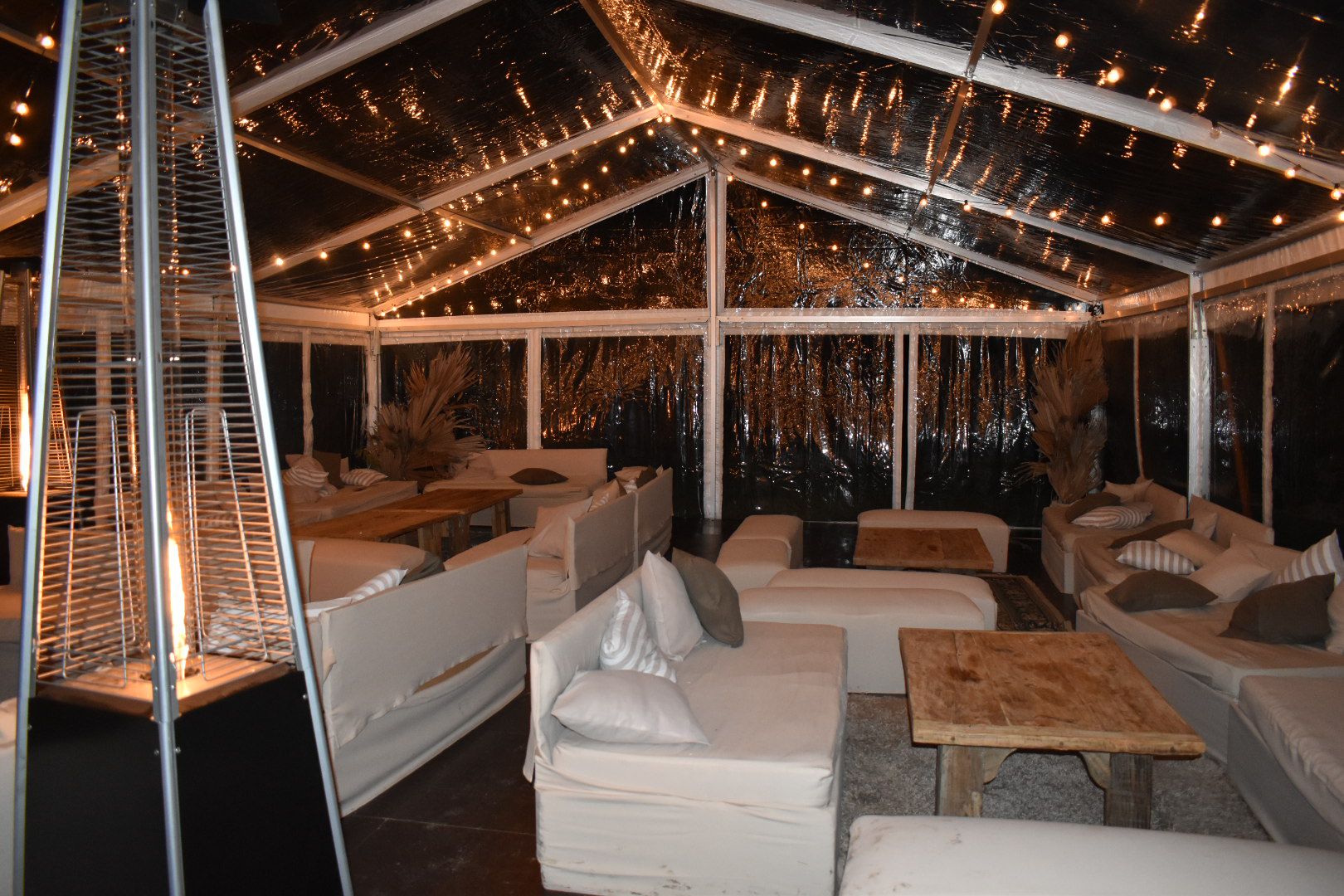
Celebration-led projects are the largest documented application in the tent rental segment; a lit, transparent configuration is a typical seasonal rental specification.
Where this pick stops working. If the project requires documented span, height and structural certification to satisfy a venue, a client's technical team or an insurer, the party tent description alone will not close the conversation. That requirement moves the project to the Event Tent pick below.
Pick 2 — Event Tent: the pick when documentation and span decide the deal
ExpoTent's Event Tent is a documented product line rather than a general category. In the product record it is listed as a pagoda tent type built from aluminum and PVC, available across ten models: SLP-3, SLP-6, SLP-10, SLP-12, SLP-15, SLP-20, SLP-25, SLP-30, SLP-40 and SLP-50.
Documented parameters. The recorded range is a width of 3–50 m, a length of 3–1000 m, and a height of 2.5–10 m, in aluminum and PVC. Those figures matter at the shortlist stage because they tell a buyer immediately whether the product family can cover the project, before any quotation is requested. The applicable industry recorded for the product is events companies.
Scenario it fits. Event builds where the structure is part of a professional delivery: public events, exhibition and trade-show footprints, temporary venue space, and rental fleets that need a product family rather than a single size. The long length range supports structures that are extended rather than repeated, which is usually the cheaper route when a site is linear.
Buyer profile it fits. Event production companies and exhibition contractors that must hand documentation to a client; rental operators scaling a fleet across several sizes; venue and sports operators who need a semi-permanent enclosure; and buyers whose projects cross markets and therefore need to know which certificate applies where.
Documented compliance. The Event Tent carries CE certification number ICR/VC/HB241001, issued by ICR, scoped to Europe, citing standard EN 13782:2015, issued on 25 October 2024 and valid until 24 October 2029. EN 13782 is the structural safety standard commonly referenced for commercial event tents, and a five-year validity window is long enough to plan a rental fleet around.
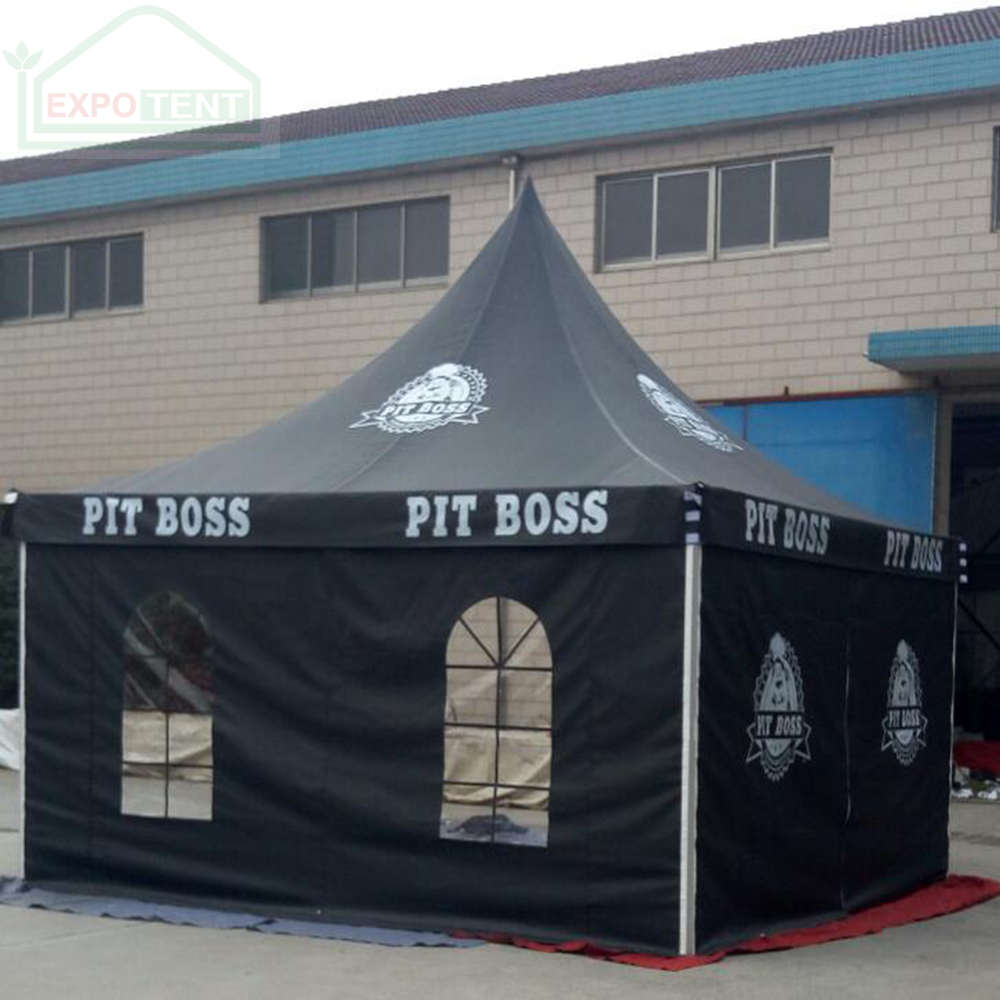
The ExpoTent Event Tent is recorded as a pagoda tent type in aluminum and PVC, produced across the SLP-3 to SLP-50 model range.
Where this pick stops working. The recorded parameter range is a published product range, not a site assessment; the model that fits a specific site still has to be matched to the footprint, access and anchoring conditions. The recorded CE certification is scoped to Europe, so buyers shipping elsewhere should confirm which documentation applies to their destination before production begins.
Step-by-step: from this shortlist to a first order
Five steps turn the recommendation above into a procurement that does not need a second round.
Step 1 — Write the scenario sentence. One line covering the occasion, the site, the season, the intended duration of use, and who operates the structure. This sentence decides the pick; nothing else should.
Step 2 — Assign the pick. Celebration-led, repeat-hire projects go to the Party Tent. Projects where a third party will ask for span and certification go to the Event Tent. If a programme contains both, treat them as two line items rather than one blended request.
Step 3 — Map the site to the documented range. Check the footprint against the Event Tent's recorded width of 3–50 m, length of 3–1000 m and height of 2.5–10 m, and select the corresponding model from SLP-3 through SLP-50. Confirm the access route and the anchoring substrate at the same time, because both affect installation.
Step 4 — Verify compliance and validation. Ask which standards apply to the destination market — ISO 9001, NFPA 701 and EN 13782 are the commonly referenced set for commercial event tents — and request the certificate details for the specific product, including the number, the authority, the standard and the validity window. The Event Tent record shows ICR/VC/HB241001 from ICR against EN 13782:2015, valid from 25 October 2024 to 24 October 2029 in Europe.
Step 5 — Fix the commercial terms and lead time. Record the minimum order quantity (1 unit), delivery terms (FOB or CIF), payment terms (30/70), acceptance criterion (pre-shipment test assembly), and lead time (20–30 days) in writing before production starts. Monthly capacity is recorded at 10,000 m², so a programme that exceeds that figure in a single month needs to be scheduled rather than assumed.
Steps 4 and 5 are where most first orders either become reliable or become a dispute. The acceptance criterion is the one to insist on: a test assembly before shipment catches fit and fabric issues while the container is still at the factory.
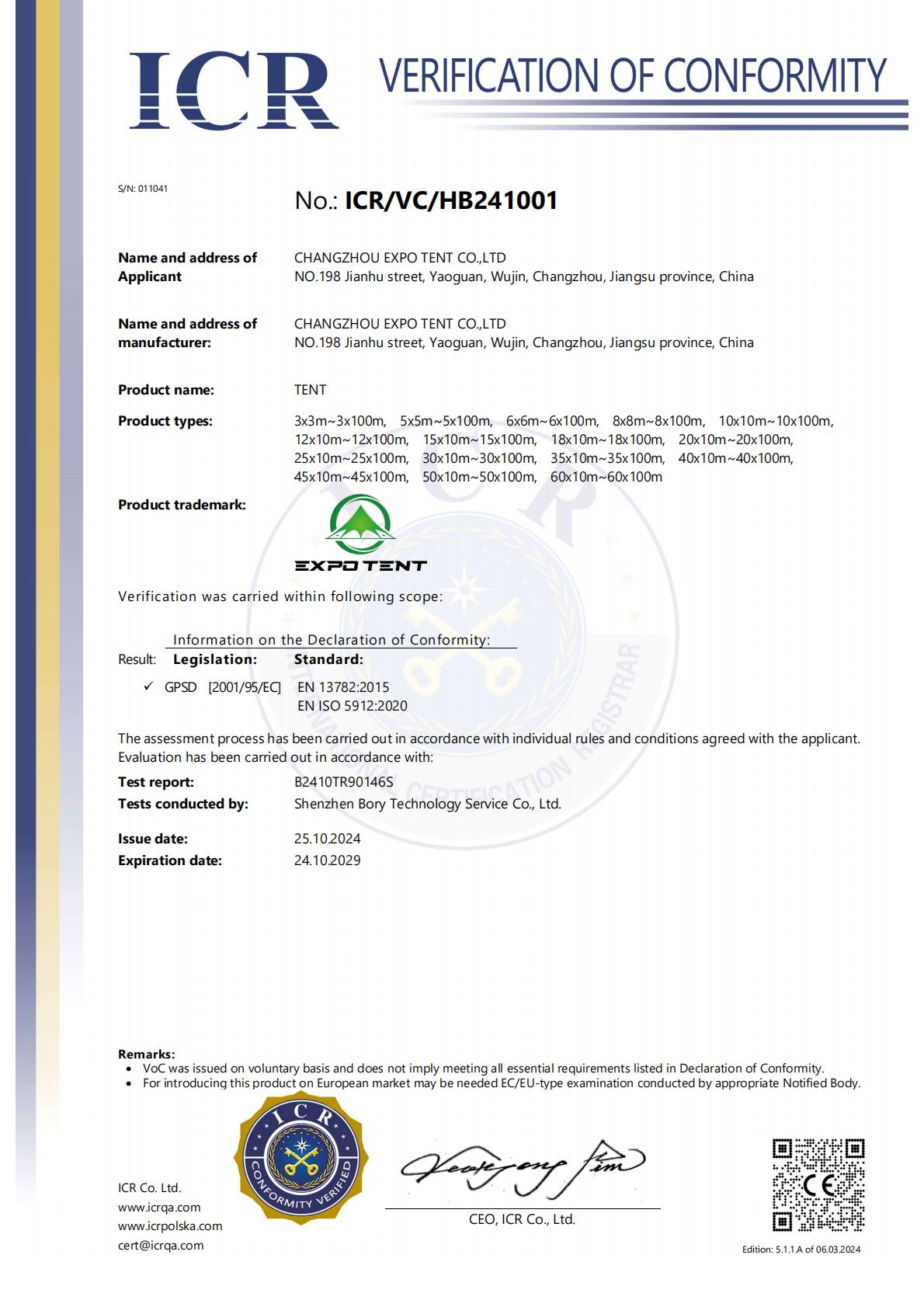
Event Tent compliance record: CE certificate ICR/VC/HB241001 issued by ICR against EN 13782:2015, valid 25 October 2024 – 24 October 2029, scope Europe.
Use cases: which pick fits which project
Weddings and private celebrations. Hire-and-return demand with the shortest seasonal cycles. This is the Party Tent's home scenario, and it is also the largest documented application in the tent rental segment, where weddings account for 38.5% of the market measured for 2025.
Public events, festivals and exhibitions. These projects bring a client, a venue and often a contractor together, and one of them will ask for structural documentation. This is the Event Tent scenario, supported by the recorded EN 13782:2015 certification and by the 3–50 m width range that allows several functions to sit under one product family.
Rental fleet expansion. Operators adding models rather than replacing them. The SLP-3 to SLP-50 model sequence lets a fleet grow through sizes inside the same series, and the recorded monthly capacity of 10,000 m² indicates how much can be absorbed in one production window.
Sports and seasonal training space. ExpoTent's manufacturing range includes sports tents, which sit in the same fabric-structure family as the two picks and are usually specified by cover, enclosure and anchoring rather than by occasion.
Storage and logistics cover. The warehouse tent category is a separate demand engine: the temporary storage buildings market was valued at USD 8.6 billion in 2025, driven by e-commerce expansion. Buyers whose needs start with events and later shift to storage are better served by a supplier with both categories than by one with neither.
Comparison: Party Tent vs Event Tent at the shortlist stage
The table below compares the two picks only on facts that are documented. Where the available product data does not specify a parameter, the table says so rather than estimating.
| Decision dimension | Pick 1: Party Tent | Pick 2: Event Tent |
|---|---|---|
| Primary scenario | Social and celebration-led projects — parties, receptions and comparable hired-in occasions | Specification-led event builds where a client, venue or insurer requires documented structure data |
| Buyer profile | Party and wedding rental operators; planners adding a celebration line; venues buying instead of renting; first-time importers validating a category | Event production and exhibition contractors; rental fleets scaling across sizes; venue and sports operators; semi-permanent enclosure buyers |
| Position in the ExpoTent range | Part of the manufacturer's range, alongside wedding tent, marquee, pagoda tent, clear span tent, frame tent, church tent, sports tent and warehouse tent | Documented product line: Event Tent, pagoda tent type, models SLP-3 to SLP-50 |
| Documented structural parameters | Not specified in the product data available for this guide — confirm with the supplier | Width 3–50 m; length 3–1000 m; height 2.5–10 m; aluminum and PVC |
| Documented compliance | Not specified in the product data available for this guide | CE certificate ICR/VC/HB241001, issued by ICR, scope Europe, standard EN 13782:2015, valid 2024-10-25 to 2029-10-24 |
| Documented reference case | OEM buyer in Uruguay, 1 unit, party application, 10-year service duration, result recorded as rain proof, highlight recorded as rain and wind proof | The same reference case lists the Event Tent as the related product |
| Commercial entry point | Shared terms: MOQ 1 unit; FOB or CIF; payment 30/70; acceptance by pre-shipment test assembly | Shared terms: MOQ 1 unit; FOB or CIF; payment 30/70; acceptance by pre-shipment test assembly |
| Where the pick stops fitting | When a third party requires documented span and structural certification | When the project is a high-volume private celebration resale with no certification dossier required |
Event Tent recorded specification
| Attribute | Documented value |
|---|---|
| Product name | Event Tent |
| Type | Pagoda tent |
| Models | SLP-3, SLP-6, SLP-10, SLP-12, SLP-15, SLP-20, SLP-25, SLP-30, SLP-40, SLP-50 |
| Width | 3–50 m |
| Length | 3–1000 m |
| Height | 2.5–10 m |
| Material | Aluminum and PVC |
| Applicable industry | Events company |
| Certification | CE, certificate ICR/VC/HB241001, authority ICR, standard EN 13782:2015, scope Europe, issued 2024-10-25, expires 2029-10-24 |
Frequently asked questions
What certification should a buyer request for an event tent shipped to Europe?
For the European market, request the CE certificate and check four fields: the certificate number, the issuing authority, the standard cited, and the validity window. ExpoTent's Event Tent record shows certificate number ICR/VC/HB241001 issued by ICR against standard EN 13782:2015, with a Europe scope and validity from 25 October 2024 to 24 October 2029. EN 13782 is the structural safety standard commonly referenced for commercial event tents; where flame resistance of textiles must be demonstrated, NFPA 701 is the widely referenced test standard, and ISO 9001 covers quality management. Confirm which document set the destination market and the venue actually require before production begins.
Can ExpoTent manufacture tents on an OEM basis with a buyer's own branding?
Yes. ExpoTent's production record lists OEM as the production mode and LOGO as the customization option. The supporting capability data shows a 3,000 m² factory, 30 employees, a 3-engineer development team, a monthly capacity of 10,000 m² and an annual output of 100,000 m². Exports account for 50% of output, with recorded markets in the EU, Africa, the USA, Asia and the Middle East. Buyers planning an OEM programme should match those capacity figures against their own annual volume before requesting a sample.
What are the minimum order quantity, delivery terms and payment terms?
The recorded commercial terms are a minimum order quantity of 1 unit, delivery terms of FOB or CIF, and payment terms of 30/70. The recorded acceptance criterion is a pre-shipment test assembly of the tent. This guide does not publish tent prices, because pricing depends on model, span, fabric and customization level; a written quotation against a defined configuration is the correct next step.
How can a buyer validate quality before shipment?
The recorded acceptance criterion for an ExpoTent order is test assembly of the tent before shipment, which means the structure is erected at the factory so that frame fit, fabric quality and connections can be checked while the goods are still in the production facility. After-sales support includes an assembly video to help the receiving team install the structure correctly. A buyer validating a new supplier can combine both: write the pre-shipment test assembly into the order as an acceptance condition, and request the assembly video as part of the handover documentation.
What lead time should be planned, and what is the next step?
Production lead time is recorded at 20–30 days, supported by a monthly capacity of 10,000 m², so the planning figure is the lead time plus shipping and any scheduling around the pre-shipment test assembly. Before that, confirm which model in the 3–50 m span range matches your site. To move from shortlist to a concrete offer, request a quotation for the Party Tent or Event Tent configuration you need, and review the full ExpoTent catalogue before the first call.
Conclusion: pick the category first, then evaluate the supplier
The recommendation on this page is deliberately narrow. If your project is a celebration-led, repeat-hire scenario, the Party Tent is the correct shortlist entry, and the recorded reference case — an OEM buyer in Uruguay with a 10-year service duration and rain and wind resistance noted — shows what that use looks like in practice. If your project is a specification-led event build where someone other than you will ask for structure data, the Event Tent is the correct entry: a pagoda tent type in aluminum and PVC, produced from SLP-3 to SLP-50 across widths of 3–50 m, lengths of 3–1000 m and heights of 2.5–10 m, and backed by CE certificate ICR/VC/HB241001 to EN 13782:2015.
Everything after that belongs to supplier evaluation: whether the manufacturer's range covers your next project as well as this one, whether its capacity fits your annual volume, whether its compliance record matches your destination market, and whether its acceptance criteria protect you before the container leaves. ExpoTent, operating as Changzhou Expo Tent Co.,Ltd., manufactures in Changzhou, Jiangsu Province, China, exports 50% of its output to the EU, Africa, the USA, Asia and the Middle East, and records a monthly capacity of 10,000 m² with a 20–30 day lead time.
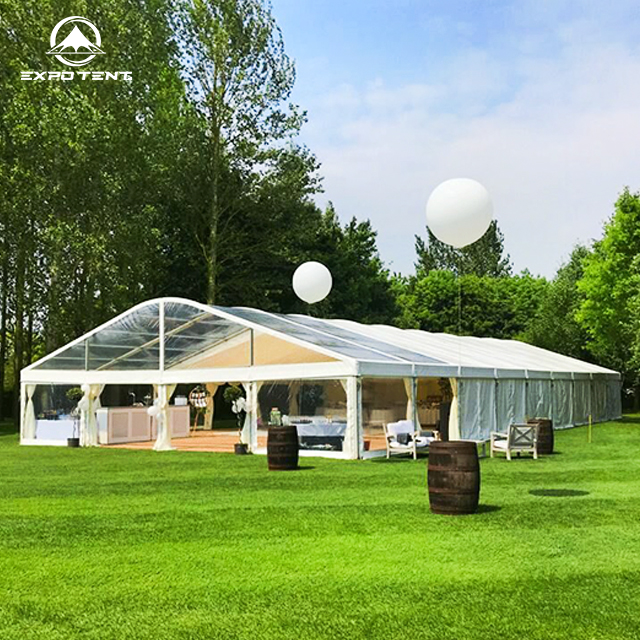
A pagoda-style event tent installed on site — the structure class recommended for specification-led event builds.
Next step: request a quotation or a sample. Tell us the occasion, the site footprint and the market you are shipping to, and we will match the configuration — Party Tent, Event Tent, or a mixed rental fleet — and confirm the compliance documents your destination requires.
Download the full product catalogue (PDF): ExpoTent product brochure
Website: www.expotentchina.com · Blog: blog.expotentchina.com
Email: sales@expotentchina.com · Tel/WhatsApp: +8613775033077
Contact: Baggio · Address: No. 198, Jianhu Street, Yaoguan Town, Wujin District, Changzhou City, Jiangsu Province, China 213000
Have Questions or Need More Details?
Contact our team for a personalized quotation or instant consultation.
Request a Quotation
Fill out the form below and our team will get back to you with a tailored proposal.
WhatsApp Direct Chat
Prefer to chat in real-time? Message us on WhatsApp for instant assistance & quick answers.
- Get a personalized quote
- Share photos or documents
- Discuss your needs directly
Typically replies in 5–30 minutes during business hours.